Doorva Garg
DIMACS REU 2026
Ribosomal Motif Interaction Patterns
About Me
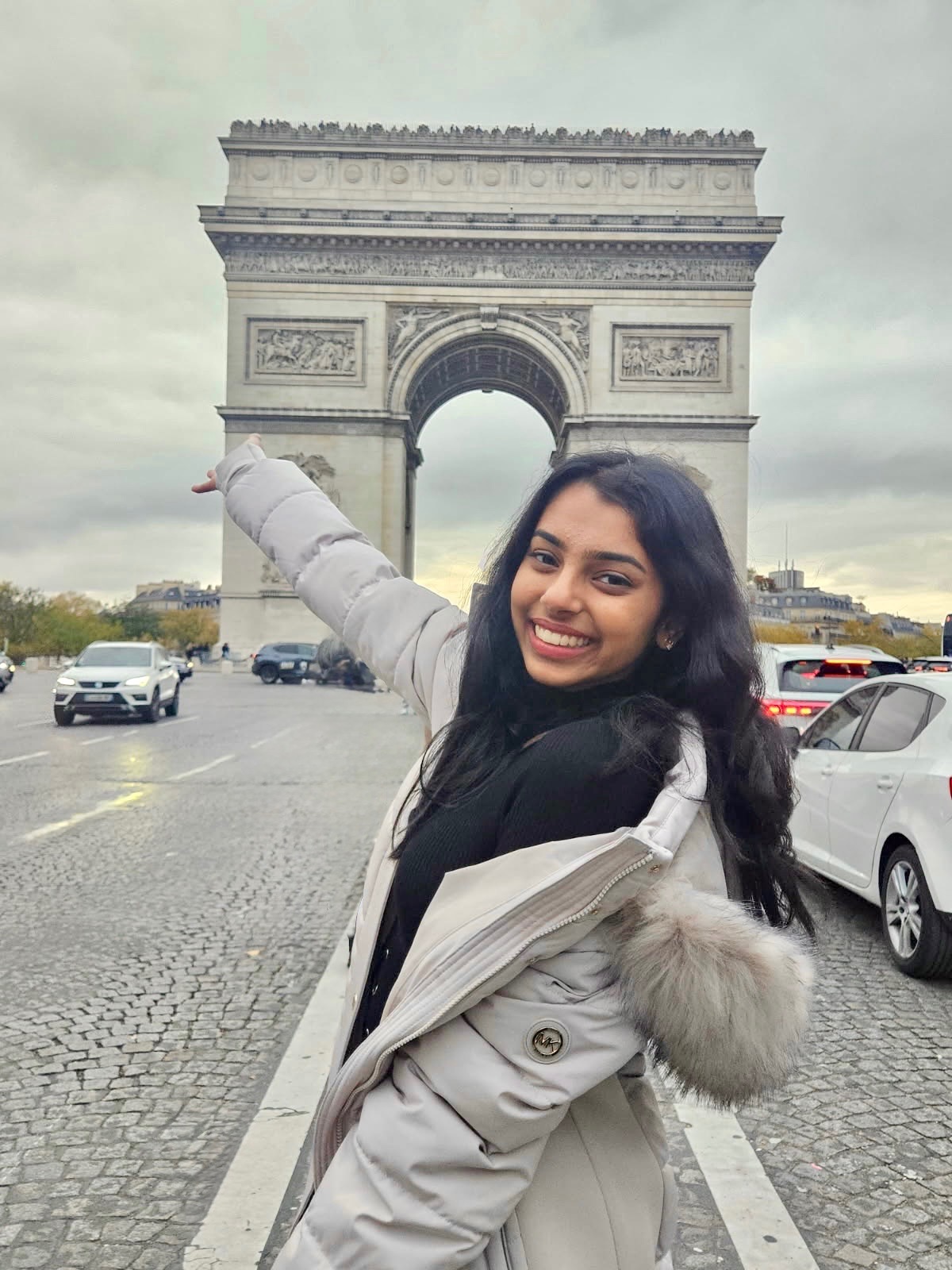
Welcome to my website! My name is Doorva Garg, and I am a Biology major with a concentration in Quantitative Biology and Bioinformatics at Stony Brook University. I am in the Scholars for Medicine program and look forward to starting medical school at Renaissance School of Medicine in 2028!
This summer, I am studying Ribosomal Motif Interaction Patterns with Dr. Wilma Olson. I have also worked on projects involving protein–protein docking, machine learning, CRISPR-based genetic engineering, and survey-based research.
Outside of research and healthcare, I am a competitive dancer in the Raas All Stars Dance circuit and love all things puzzle from jigsaws to escape rooms!
Connect with me on LinkedIn!
Acknowledgements
My research this summer would not have been possible without the immense support I have recieved. Thank you SO much to NSF (grant CCF-2447342) for funding my project, to Rutgers DIMACS for providing amazing facilities, and of course, to Dr. Wilma Olson for her mentorship and guidance all summer. I would also like to thank Dr. J. Peter Gergen, Dr. Corey S. O'Hern and Mr. Timothy Barron for providing me letters of recommendation.
Progress Log
Week 1
My first week at DIMACS (note: pronounced "daɪ.mæks" not "dɪˈmæks")! I met my cohort at our socials and was introduced to DIMACS at orientation. We were greeted by resin ducks and cows scattered around the offices, which was adorable and made the space feel very welcoming! I also met with my Principal Investigator (PI), Dr. Wilma Olson, to discuss potential projects, and I found myself especially drawn to exploring ribosomal structure, which we decided would become my focus for the summer. Much of my week was spent conducting literature review and experimenting with several visualization and analysis tools, including PDB, PyMol, DSSR, and RiboVision 2.0.
Week 2
This week, I delivered my problem statement presentation to my REU cohort, DIMACS faculty and our PIs. I conducted background reading to identify current gaps in research with my PI and continued learning how to use the various computational biology tools. I also finished a 1000 piece puzzle with Sofia (more under “Summer Side Quests”) and went out for a Friday night dinner with her, Allison and Lucy!
Week 3
As my project focus became clearer, I got to spend more time working with visualization tools. I used RiboVision 2.0 to map out 2D graphs for both E. coli and human ribosomes, tracking nucleotide distances both from the centerline of the exit tunnel as well as along its length. I also successfully modeled the centerline of the E. coli ribosome exit tunnel using PyMOL. Outside of the lab, Sofia and I started our second 1000 piece puzzle (shout out to Rutgers’ Mathematical Sciences and Physics Library for kindly lending us these puzzles!).
Week 4
This week, I focused on developing and refining methods to visualize and analyze ribosomal exit tunnel geometry across multiple species. I modified the tunnel centerline visualization workflow in PyMOL by transferring radius values into the B-factor field and adjusting van der Waals radii, which allowed for more accurate visualizations. I then mapped residues within 20 Å of the ribosomal centerline from across all three domains of life onto 2D maps. Because different PDB structures from the same species are often positioned in different coordinate frames, I began learning molecular superposition techniques to place structures into a common reference frame for direct comparison in 3D. This included studying coordinate transformation methods used in the Mathematica notebooks provided by Dr. Olson and implementing Kabsch-based structural alignments between ribosome structures in Python. In addition to maintaining my lab notebook, I began formally documenting my protocols for future researchers to use. So far, I have documented custom mapping on RiboVision 2.0 as well as creating centerline structures.
During a conversation with Lazaros, I found out the resin ducks are actually DIMACS’ mascot of the year! I love how the tradition started out as a prank and can’t wait to see what they do over the years (maybe little pigs?!). Also, Dr. Calderoni took a few of us REU kids to dinner at Tavern on George, which was so much fun (thank you)!
Week 5
This week, I built on the tunnel visualization and structural alignment methods. I focused on converting my existing 2D tunnel maps into 3D visualizations. I first worked on extracting nucleotide indices and their corresponding atomic coordinates from mmCIF files using Python. I created visualizations that color-code residues by both distance along the tunnel and rRNA large subunit domain, making it easier to examine tunnel organization in three dimensions. Through this process, I gained a lot of experience with PyMOL scripting including creating selections, applying custom coloring schemes, adjusting visual representations, and modifying display settings to improve the clarity of structural visualizations. I then generalized my code for molecular superposition to simplify the alignment process and make it easier to compare different types of molecular structures. I will begin testing my code on tRNA structures this weekend.
We celebrated Culture day this week with snacks and a lot of presentations by the REU students and Larry, which was very fun! Following last week’s Scientific Writing workshop, we had a very interesting Research Ethics workshop. It reminded me a lot of my own bioethics rabbit hole I chased (exciting and horrifying at the same time) while preparing an IRB submission last summer. Shout out to Lazaros for making the presentations so engaging!
Summer Side Quests
The Fish Puzzle
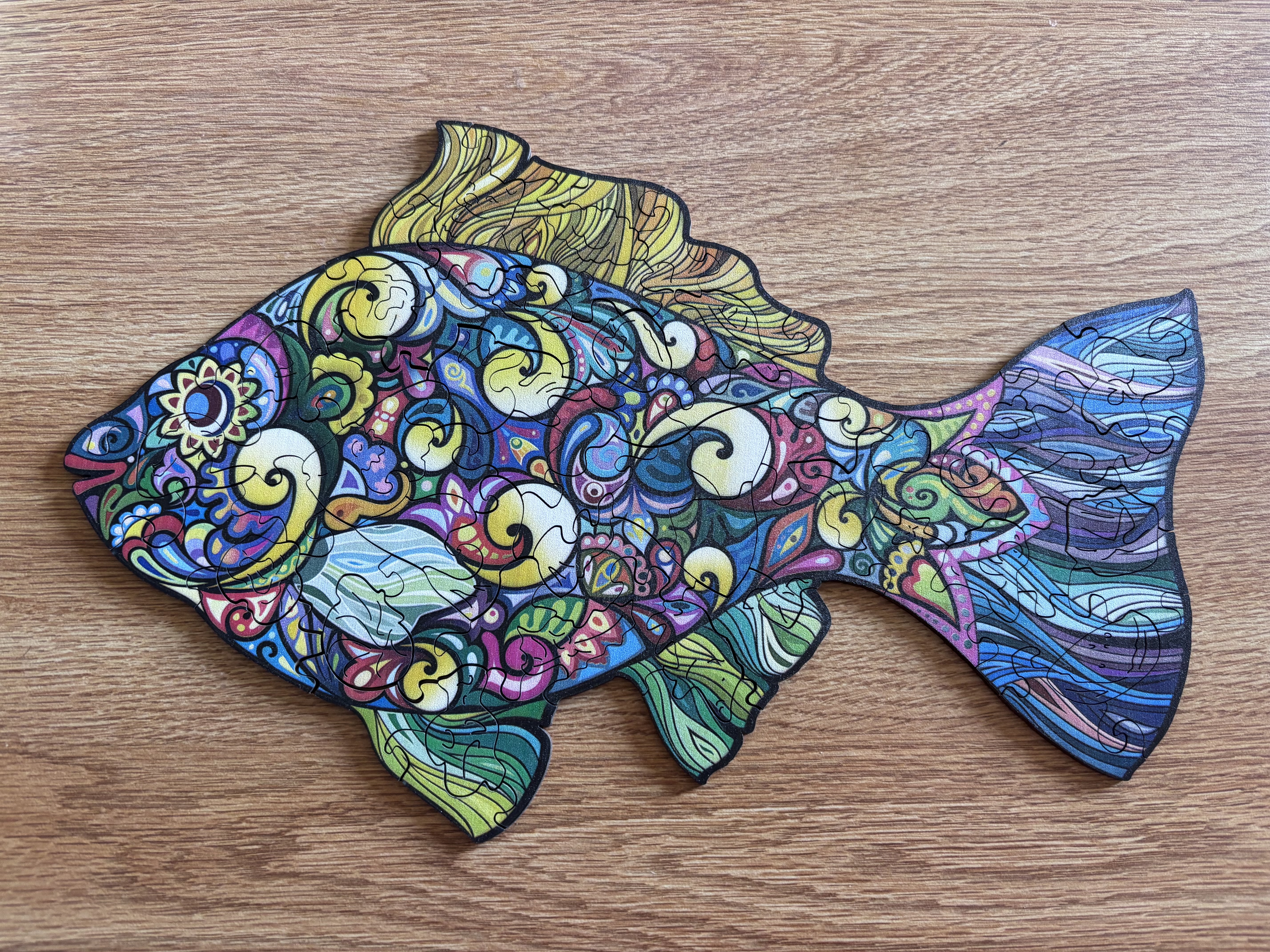
Time: 00:19:53.25
The first of many puzzles borrowed from the Mathematical Sciences and Physics Library. It was really fun to do since the pieces had very cool and distinct shapes (some were animals!) but the puzzle didn't hold itself and kept falling apart.
The Newsstand Puzzle
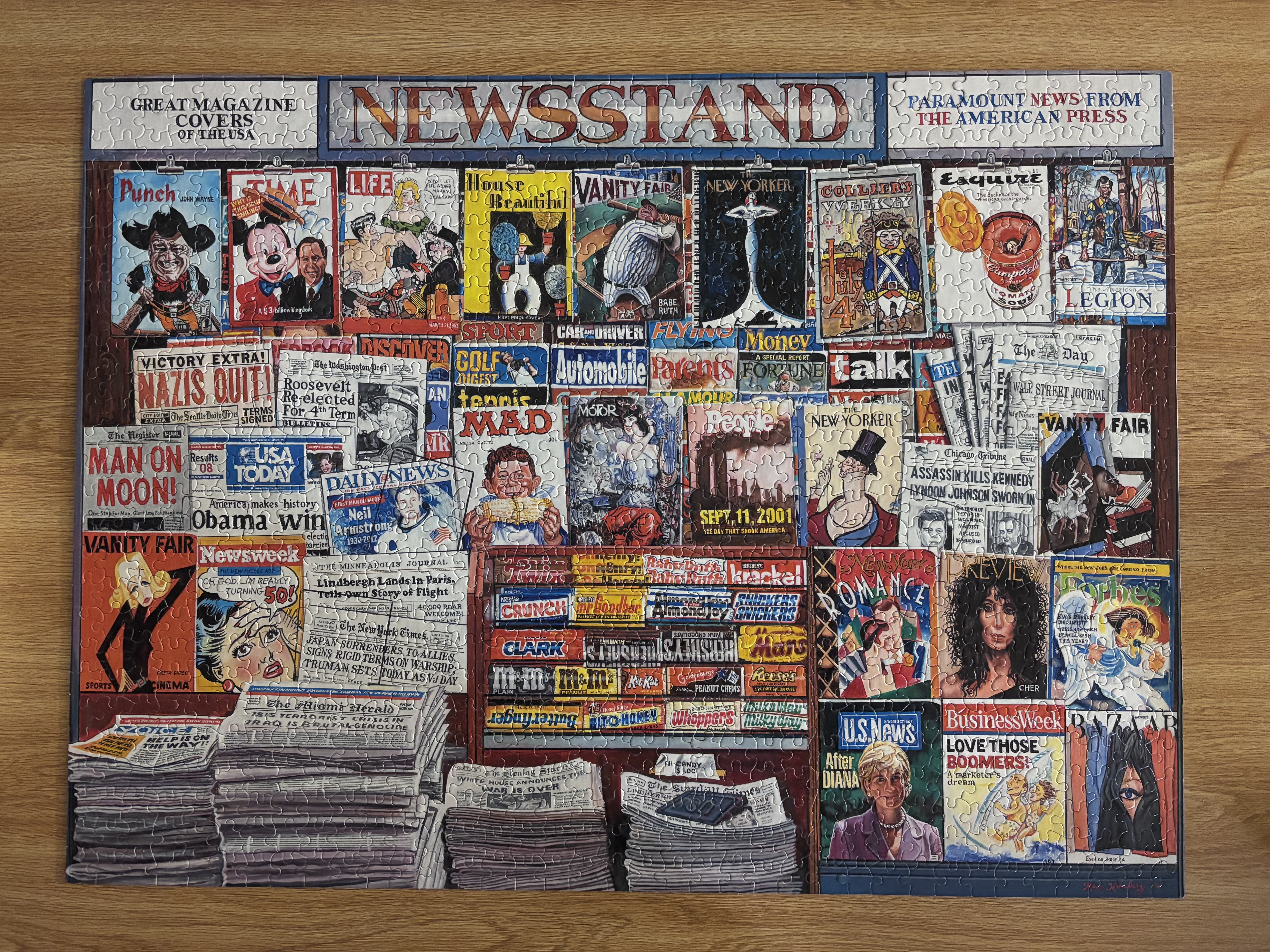
Time: 03:28:00
The first 1000 piece puzzle I completed with Sofia! We finished it a lot faster than we thought and had a lot of fun finding the unique patterns and headlines. The pieces fit together very well and the puzzle became a nice way to wind down after dinner.
Mango Mango
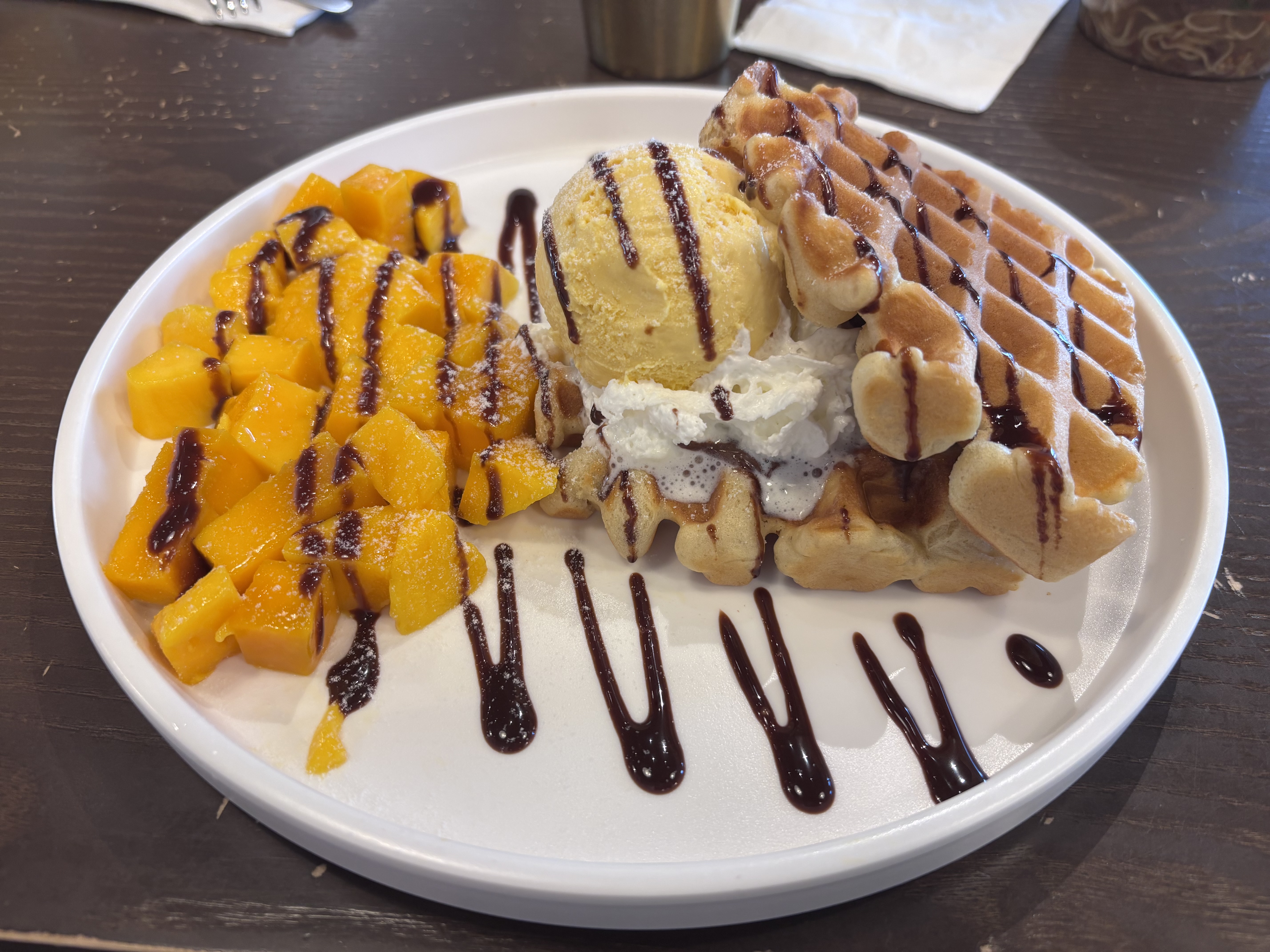
After dinner, some of us went to Mango Mango for dessert! As someone who ADORES sugar and mangoes in general, the bar to impress me was quite low but nonethless, I'd highly recommend trying their Waffle dessert with Alphonso mango ice cream!!!